


Identifying and Managing Your Organization’s AI Risk Level
As organizations adopt more AI tools, they’re also adopting the risks that come with using those tools. Understanding the risks your organization is taking with AI is key to developing a comprehensive AI governance strategy.
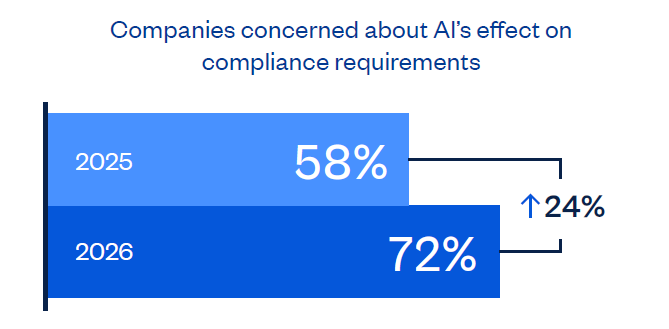
If you’re beginning to worry about the ways your organization is mitigating AI risk, your concern isn’t unfounded. According to the 2026 Compliance Benchmark Report, 72% of organizations are concerned about AI’s effect on compliance requirements, highlighting just how complex the regulatory landscape has become.
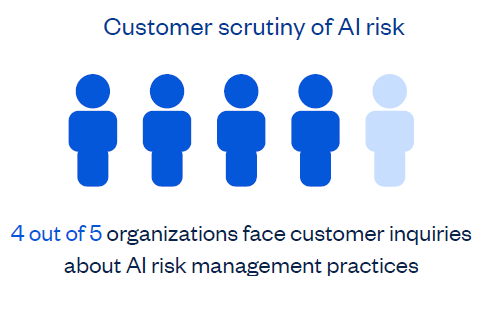
Customers are emerging as a driving factor for concern over AI risk, too. Four out of five organizations now face direct inquiries from customers about their AI risk management practices, according to the 2026 Compliance Benchmark Report. This shows that your stakeholders want to know that the tools you use are safe, ethical, and secure.
Read on to explore how to identify your organization’s level of risk and strategies for mitigating it, whether you’re just beginning your AI governance journey or have a comprehensive plan.
Identifying AI risk in your organization
The first step to developing an AI governance strategy is identifying your level of risk. This involves understanding how AI intertwines with your organization and where the risk is coming from. This could include things like misuse, inadequate oversight, and third-party vulnerabilities.
These missteps could pose negative consequences if your organization is impacted. Even without AI tooling, AI-powered cyberattacks are making breaches more likely, and could go beyond a financial impact to hinder your reputation. Once customer trust is broken, it’s almost impossible to mend. Being realistic about the risks that exist beyond your environment will empower your organization to work smarter.
Benefits of mitigating AI risk
Mitigating AI risk won’t just have a positive impact on your internal security culture, it can instill a sense of trust for your customers and other stakeholders, too. Identifying your organization’s level of risk and developing a strategy for mitigating it can enable your company to:
- Document and communicate controls so customers, boards, and auditors have clear visibility into how AI risks are managed.
- Manage risk systematically through repeatable, auditable processes such as risk assessments, bias audits, and performance monitoring.
- Prepare for multiple regulatory paths by harmonizing governance across jurisdictions and regulatory regimes.
- Train and empower personnel so executives, compliance teams, and employees understand their role in responsible AI adoption.
Options for risk mitigation
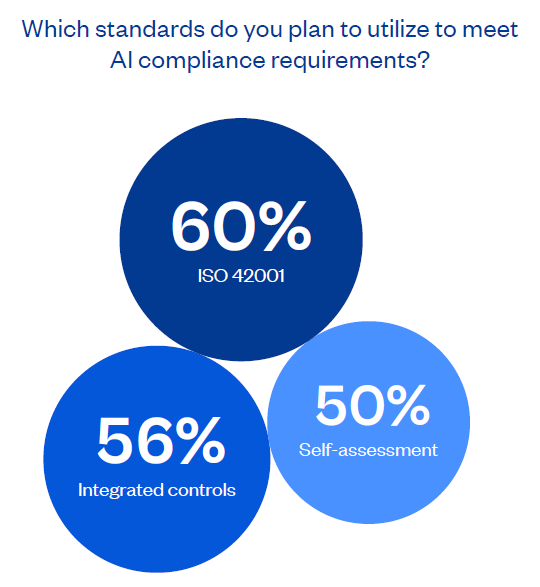
There is no “one-size-fits-all” for AI governance. Companies are scrambling to find the “right” way to manage this new frontier. Several methods are emerging as standard approaches to AI risk strategy:
- ISO 42001: 60% of organizations are looking toward this specific AI management system standard.
- Integrated controls: 56% are weaving AI checks into their existing governance frameworks.
- Self-assessment: 50% are relying on internal audits and checks to gauge their exposure.
Assess your options and needs based on your industry, company size, location, and customer base. If you work in a highly regulated industry like healthcare or finance, you will need to maintain a rigorous level of compliance with AI standards to operate and remain in good standing with standards like HIPAA or GDPR. Meanwhile, organizations that are using AI to brainstorm in a creative industry might have fewer regulations to comply with. It’s all about understanding your environment.
Location can also impact the level of complexity your AI governance strategy should maintain as emerging regulations mean more companies must pursue formal compliance. The 2026 Compliance Benchmark Report found that in the next 12 months, 47% of organizations expect to be impacted by the EU AI Act. If you live somewhere that could be impacted by formal regulations, get ahead of the curve.
Enlist the right partners
After you’ve decided on the approach for your organization – whether it’s an internal policy or a formal regulation like ISO 42001, enlist the right partners. AI is evolving rapidly, and bringing in the right team can mean the difference between a smooth-sailing ship and financial implications of being out of compliance with a mandatory framework.
The level of complexity of your AI governance strategy will dictate what’s right for your organization. If you’re developing an internal policy, a consultancy may do the trick. If you’re pursuing a formal certification, a trusted auditor is essential.
Why A-LIGN
A-LIGN is a strategic, trusted audit partner that can help your organization build, level up, and scale your AI governance strategy. The A-LIGN difference is:
- 6.4k+ global clients
- 36k+ audits completed
- 400+ auditors globally
If you’re ready to take the next step in your AI governance strategy, reach out to A-LIGN today.