


FedRAMP 20x: What It Is, How It Differs from Rev. 5, and Where It Stands Today
Traditional FedRAMP pathways have long been criticized for being slow, manual, and documentation heavy. Even if you had the time, money, and effort to go through the authorization process, the larger question always loomed: “Can I find a Federal Agency “Sponsor” to partner with me through the Authority to Operate (ATO) process?”
Enter FedRAMP 20x — a new assessment and authorization path being developed in collaboration with industry and government. Its main goal? Rapidly increase the size of the FedRAMP Marketplace for agencies to be able to use the best Cloud Service Offerings (CSOs) commercially available, while maintaining protection over unclassified information.
In this post, we’ll explain what FedRAMP 20x is, how it differs from the existing Rev. 5 model, and where the program stands today — including the official phase structure and timelines.
What Is FedRAMP 20x?
FedRAMP 20x is an initiative by the GSA to build new FedRAMP authorization paths, streamline processes through automation, and encourage government-wide adoption of commercial cloud services. Instead of the traditional document-centric process, 20x leans into machine-readable evidence and automation, which has shown significantly shorter time to authorization in the pilot compared to legacy pathways.
Not only does it reimagine the documentation process, but it flips the entire security review process on its head. Instead of reviewing via the control-by-control narrative approach, it has developed “Key Security Indicators” (KSIs), which are a set of security capabilities that focus on measurable outcomes instead of prescriptive processes.
It’s important to note that the 20x program is currently being developed, as it’s going through its pilot phases with the goal of becoming publicly available Q3 of 2026.
How the legacy FedRAMP pathway operates
The traditional FedRAMP authorization model is rooted in National Institute of Standards and Technology SP 800-53 Rev. 5 controls and emphasizes thorough documentation, manual review, and compliance reporting.
Key characteristics of the Rev. 5 pathway include:
- Extensive System Security Plan (SSP) documentation
- Manual narrative evidence review
- Agency partner or “sponsorship”
- Iterative PMO review cycles
These aspects build high assurance but often at the expense of speed and cost.
FedRAMP 20x vs Rev. 5: Key differences
FedRAMP 20x is not a “shortcut”— it’s a different pathway that prioritizes automation over narrative descriptions and manual reviewer interpretation. Here’s a quick look at how the legacy process works compared to 20x:

FedRAMP 20x phases and status
FedRAMP 20x is being delivered in phases, each with specific goals and pilots. Official documentation notes that timelines are estimated and subject to change based on real-world feedback.
Phase 1 – FedRAMP 20x Low pilot (completed)
Tested the first version of the 20x approach with Low impact authorizations, introducing machine-readable evidence and alternative validation methods.
A-LIGN participated as a 3PAO assessor of 20x Low systems as well as getting their own audit management software, A-SCEND, 20x Low Authorized.
Phase 2 – FedRAMP 20x Moderate pilot (active / current)
Participation was limited and not open to the general public; 13 selected CSPs from the Phase 1 20x Low pilot are working with FedRAMP and assessors to test the approach. That approach focuses on Moderate impact systems using automation and Key Security Indicators (KSIs).
The goals of Phase 2 are to:
- Test how CSPs can effectively meet automated validation requirements for initial and ongoing FedRAMP Authorization
- Test how these automated capabilities can be effectively assessed by third parties
- Understand how providers and assessors can work together to deliver innovative evidence of the ongoing security decisions within a cloud service
This is active and estimated to operate through Q2 of 2026.
What’s next (estimated goals)
While the published timeline from FedRAMP outlines estimated goals, they’ve also introduced a new naming convention for certification classes. The terms “Low,” “Moderate,” and “High” are being replaced with the following:
- Class A: Replaces FedRAMP Ready
- Class B: Replaces Low
- Class C: Replaces Moderate
- Class D: Replaces High
Additionally, there will now be a single certification name called FedRAMP Certified, as the “FedRAMP Validated” naming convention has been dropped.
Here’s what will come next after the current Phase 2 pilot ends:
Phase 3 – Wide-scale adoption of Class B and Class C
This is the phase in which Class B and Class C authorizations will become publicly available. Before that can happen, FedRAMP will formalize all Class B and Class C requirements based on the outcomes of Phase 1 and Phase 2.
This is estimated to happen in Q3-Q4 of 2026.
Phase 4 – Class D pilot
While the Class B and Class C authorizations continue, the pilot program for Class D authorizations will begin. This is targeted at hyperscale IaaS and PaaS providers, according to FedRAMP.
Note: During this phase, all Rev. 5 Authorized providers will be required to transition to machine-readable authorization data for both initial and continuing authorization.
This is estimated to happen in Q1-Q2 of 2027.
Phase 5 – End of life for new Rev. 5 authorizations
FedRAMP will stop accepting new Rev. 5-based agency authorization at the end of this phase. FedRAMP will also provide a clear path and timeline for ensuring all legacy Rev. 5 Authorized CSOs can transition to a 20x-based authorization. The deadlines for transitioning are not defined but are stated as “likely to include multi-year deadlines”
This phase is estimated to happen in Q3-Q4 of 2027.
Note: FedRAMP emphasizes that these timelines are goals and may shift as the program learns from pilot feedback.
What this means for cloud providers
Early planners: Understand that 20x is not fully baked, but the direction is clear and will be publicly available soon. Automation and machine-readable evidence are becoming central, even if you are planning for a Rev. 5 Authorization.
Mid-Rev. 5 authorizing CSPs: Don’t assume you can pivot lanes mid-process without analysis, but be sure to build awareness of 20x and how it may impact future offerings.
Already authorized providers: Monitor how reauthorization and continuous monitoring under 20x pilots evolve. Plan for a transition to machine-readable authorization data.
Across the board, treating 20x as “something to keep an eye on” is no longer sufficient — it should be part of your compliance roadmap for 2026 and beyond.
Strategic takeaway
FedRAMP 20x represents a generational shift in federal cloud authorization — one rooted in automation, standardization, and scalable evidence models. It’s still in pilot, but its goals are ambitious:
- Lower administrative friction
- Support faster adoption of secure cloud tech
- Enable more providers to participate in the federal market
Planning now will save tactical scramble later.
What CISOs Actually Look for in Audit Reports
Rick Orloff, a Fortune 1000 CISO and Strategic Advisor at A-LIGN, leverages over 20 years of experience at companies like Apple and eBay to guide enterprise security and audit strategies.
If you’ve ever spent weeks preparing a SOC 2 or ISO audit report only to wonder whether anyone actually reads it — the answer is yes. But probably not in the way you think.
Experienced security leaders have a very deliberate, efficient approach to reviewing these reports. They’re not reading every word. They’re pattern-matching for risk. Here’s what that actually looks like.
Customers are emerging as a driving factor for concern over AI risk, too. Four out of five organizations now face direct inquiries from customers about their AI risk management practices, according to the 2026 Compliance Benchmark Report. This shows that your stakeholders want to know that the tools you use are safe, ethical, and secure.
Step 1: Scope — before anything else
The very first thing an experienced CISO looks at is the scope. Why? Because a clean report means nothing if it doesn’t cover the services and systems that actually matter to the business relationship. A vendor can produce a beautifully audited report that excludes the exact infrastructure handling the most sensitive data — and that gap must be identified.
The key question being asked is: Does this audit actually cover what the organization is exposed to?
A common red flag: sensitive data, like Personally Identifiable Information (PII) or HIPAA-covered information, being processed by a system, while critical components like identity and access management are left out of scope. That’s not necessarily a dealbreaker, but it demands an explanation. What’s the reason for the exclusion? What’s the residual risk?
Scope gaps don’t have to kill a deal. But they do have to be understood.
Step 2: Findings — context is everything
Here’s something that surprises a lot of vendors: findings don’t automatically spell trouble. Experienced security leaders evaluate findings with a sense of what is reasonable.
For example, a large company with 15 years of infrastructure history is going to have technical debt that includes end-of-life operating systems, legacy configurations, and so on. A finding around that isn’t shocking. What matters is whether the auditor has flagged it repeatedly, and more importantly, what the vendor does about it.
The finding itself is almost secondary. The management response is where the real signal lives. A good management response:
- Acknowledges the finding clearly
- Doesn’t read like it was trying to minimize liability
- Outlines specific, actionable mitigating controls or a remediation plan
If the management’s response is reasonable and the plan seems credible, many reviewers will stop right there, and the report passes.
Step 3: The management response — where deals are won or lost
The management response is often the deciding factor in whether a report builds trust or raises concerns. Consider two scenarios for the same finding — say, insufficient log retention for sensitive data:
Scenario A:
“We didn’t have the logs for 45 days. Here’s our plan to address it.”
This response demonstrates accountability and a clear path forward.
Scenario B:
“Log retention isn’t something we prioritize.”
This response doesn’t just raise a technical concern — it signals a cultural one. It tells the reviewer that the organization either doesn’t understand the risk or doesn’t care about it.
When it goes sideways: How CISOs decide to walk away
What happens when a vendor pushes back on a serious concern? The decision to escalate or walk away often comes down to two factors: who gave the problematic response, and how unique the vendor is.
If the dismissive answer came from the CISO themselves — someone who should know better — most experienced security leaders will end the conversation. There’s no escalation path when the top of the security organization has already signed off on a flawed position.
But if the response came from a senior manager or director, and the vendor offers something genuinely differentiated, it may be worth escalating to higher-level leadership. This allows for a clearer understanding of whether the organization’s security leadership supports the position or is open to course-correcting.
The key test: does the senior leader double down, or do they acknowledge the concern and commit to action? One answer keeps the conversation alive. The other ends it.
The takeaway for vendors
If you’re preparing for an audit or getting ready to share a report with a prospective partner or customer, here’s what actually moves the needle:
- Be deliberate about scope. If something is out of scope, know why — and be ready to explain it clearly.
- Don’t fear findings — own them. They’re expected, especially in mature organizations.
- Invest in your management response. This is your opportunity to demonstrate maturity, accountability, and a credible path forward. A thoughtful response can neutralize almost any finding. A dismissive one can end the relationship entirely.
- Culture shows. How your team talks about risk, findings, and remediation tells reviewers everything they need to know about whether your security program is real or performative.
The auditors have already done their job. When a CISO picks up that report, the question they’re really asking is: Do these people take security seriously? Make sure your report and your responses answer that clearly.
A SOC 2 report is a third-party validation that attests to an organization’s ability to protect data and information. It’s widely accepted across industries and provides a singular asset that can be used in the due diligence process with multiple prospects and customers — replacing the need to undergo a custom cybersecurity audit with each new customer.
To obtain a SOC 2 report, a company must submit to an audit whereby assessors evaluate the internal controls used to secure information, along with the systems, technology, and staff roles within the organization. Although some organizations claim they can complete the SOC 2 audit process in as little as two weeks, experienced CPAs consistently note that this timeframe is unrealistic for a thorough, high‑quality assessment. A SOC 2 audit involves multiple phases, each requiring coordination, documentation, and testing that varies based on organizational size and complexity.
In this blog, we’ll review each step of the SOC 2 audit process and explain how long each aspect of the audit process takes. This piece is meant to serve as a general guideline, as audit timelines can vary significantly based on the size of a company and the complexity of its environment and services.
Readiness phase: Find the right partner and define scope
Estimated timeline: varies (often several weeks)
The readiness phase of a SOC 2 audit focuses on selecting an audit partner, defining scope, identifying potential gaps, and ensuring controls are appropriately designed before formal testing begins. It’s important to note that SOC 2 audits are regulated by the AICPA and reports can only be generated by an external auditor from a licensed CPA firm — like A-LIGN. Once you engage with a partner, there will be some preliminary discussions to define the scope of the project and sign a contract.
If this is your first time pursuing a SOC 2 report, many organizations complete a SOC 2 readiness assessment during this phase to identify control gaps before the formal audit begins. Addressing deficiencies early can help reduce delays later in the audit lifecycle.
Once you’re ready to officially proceed, contracts will be signed and the official engagement will begin. At that point you will be introduced to your SOC audit team. At A-LIGN, SOC 2 audit teams typically consist of a senior manager, manager, and auditor.
Senior managers and managers act as primary points of contact during preliminary discussions. Auditors take over as the point person when it’s time for walkthroughs, testing, and evidence review. All three of these roles work together throughout the entire audit to ensure you are supported and informed every step of the way. By leveraging the A-SCEND audit management platform, clients are able to have direct access to the audit team to flag, ask questions, and submit evidence. The tool will help companies stay organized throughout the audit process and have a clear understanding of what is required.
Evidence collection: Information requests and documentation
Estimated timeline: 2–3 business days to issue requests; ongoing throughout testing
During the evidence collection phase, auditors issue an information request list (IRL) that outlines the documentation and artifacts required to support each control. The IRL serves as a structured guide for organizations to submit policies, system configurations, logs, screenshots, and other supporting evidence. This phase often runs in parallel with auditor walkthroughs and testing, and may include follow‑up requests if additional clarification or documentation is needed.
Timelines during evidence collection can vary depending on the organization’s readiness, the availability of internal control owners, and how quickly documentation can be gathered and submitted. Many experts recommend using audit management software to help reduce time and make the process more efficient. At A-LIGN, we use A-SCEND to streamline the process in one easy-to-use dashboard, facilitate real-time collaboration between auditors and clients, and utilize existing audit evidence for multiple frameworks.
Through A-SCEND, once the evidence is collected it is transformed into readable reports that are automatically mapped to the corresponding evidence requests from the IRL. This process reduces the amount of effort, time and resources required for providing evidence.
Audit window: Walkthroughs and control testing
Estimated timeline: 2-6 weeks
The audit window is the period when auditors perform walkthroughs, interview control owners, and test controls against the SOC 2 Trust Services Criteria. During this phase, auditors validate submitted evidence, assess whether controls are designed appropriately, and confirm operating effectiveness where applicable. The goal of this phase is to gain an in-depth understanding of your organization’s controls, processes, and procedures related to people and technology. The length of the audit window can vary depending on audit scope, organizational readiness, and the availability of internal stakeholders to support walkthroughs and follow‑up questions.
SOC 2 report issuance
Estimated timeline: 3 weeks
The final stage of the SOC 2 timeline is report issuance, when testing concludes and the auditor delivers the finalized SOC 2 report. A SOC 2 report comes in two parts:
- Draft: You’ll receive a draft report within three weeks of completing the fieldwork, sometimes earlier depending on deadlines and the complexity of the scope. During this draft report phase, you’ll have the opportunity to review the assertion, opinion, system description, and testing of the controls. If necessary, you can provide feedback or ask questions of the audit team. Once the draft report is approved internally, you’ll sign a management representation letter and notify your SOC 2 team that they can proceed with the final report.
- Final report: One to two weeks after the draft has been approved, you’ll receive a final report with any updates or clarifications requested in the draft phase.
Common SOC 2 audit delays
Common factors (and causes) that can extend a SOC 2 timeline include:
- Incomplete readiness – Controls or policies are not fully implemented before testing begins
- Delayed evidence submission – Internal teams are slow to respond to information requests
- Scope changes mid‑audit – Adding systems or Trust Services Criteria increases testing requirements
- Control exceptions – Identified gaps require remediation and re‑testing before report issuance
Proactive preparation, clear internal ownership, and early scoping decisions can help reduce these delays and keep the audit moving efficiently.
Partner with A-LIGN to begin your SOC 2 audit
A-LIGN is the #1 SOC 2 issuer audits in the world. We have completed over 17,500 SOC 2 assessments and can confidently say that a proper SOC 2 audit takes at least eight weeks to complete. In planning for your SOC 2, beware of the “14-day audit” promise — this is likely only referring to the audit readiness timeline. At A-LIGN we provide the tools and expertise to help you during every step of the SOC 2 audit journey.
Ready to pursue a SOC 2 audit for your business? Speak to an expert at A-LIGN to get started.
10 Behaviors That Undermine CMMC Assessment Quality
One of the loudest themes we hear from Organizations Seeking Certification (OSC) is not about the difficulty of CMMC. It is about the inconsistency in assessment quality. A high‑quality assessor brings clarity, confidence, and a defensible outcome. A low‑quality assessor introduces confusion, rework, and risk that lingers long after the final report. The difference between a good and a poor assessment is not toughness — it is preparation, precision, and integrity.
Key behaviors that compromise quality
The behaviors below are not minor irritations. They are signals of deeper quality issues that can derail readiness, waste time, and erode trust.
1. Ignoring the evidence and searching for what is not there
Quality begins with evaluating the implementation as presented. When assessors overlook valid artifacts and chase hypothetical gaps, objectivity slips and scope drifts. The result is frustration for the client and findings that do not hold up. Skilled assessors focus on what the requirement actually asks for and how the OSC meets it.
2. Injecting personal preferences into determination statements
Determination statements are not a platform for opinion. When preferences creep in, outcomes become uneven and difficult to defend. Consistency requires alignment to the model and to the requirement language. Quality assessors leave personal bias at the door and let the evidence lead.
3. Making findings without clear, verifiable evidence
A finding must rest on facts that can be demonstrated and reproduced. Unsupported assertions create churn, delay remediation, and damage credibility. Strong assessors tie every conclusion to specific, relevant evidence. Precision protects both the OSC and the integrity of the assessment.
4. Reviewing artifacts for the first time during the assessment
Preparation is not a courtesy — it is the work. Opening policies or screenshots for the first time on a live call signals a lack of respect for the client’s time. It also raises doubt about the quality of the outcome. Prepared assessors arrive informed, organized, and ready to engage.
5. Requesting items that were already provided
Lost evidence and repeated requests are not signs of rigor. They are signs of disorganization that cause unnecessary rework across teams. Clean evidence management creates momentum and reduces risk. Quality assessors track submissions carefully and verify before asking again.
6. Asking questions that do not map to a requirement
Curiosity is valuable; misalignment is costly. Questions that do not trace to a control create noise and invite scope creep. Clear mapping keeps the process fair, focused, and efficient. High‑quality assessors anchor every inquiry to the model and to the intended outcome.
7. Confusing aggressiveness with thoroughness
Thorough does not mean adversarial. Aggressive posturing wastes energy and erodes collaboration. Quality shows up as calm, consistent, and exacting. The best assessors are firm, fair, and always professional.
8. Operating without the technical depth the work demands
CMMC requires practical understanding of systems, networks, and operational realities. Without technical fluency, determinations wobble and remediation guidance misses the mark. Strong assessors invest in ongoing learning and field experience. Expertise is the foundation of consistency.
9. Treating the assessment as a position of power
Authority is not the point; accountability is. When ego enters the room, trust exits. The assessment should feel collaborative, structured, and transparent. Quality assessors earn influence through clarity and respect.
10. Losing sight of the mission: Quality and consistency
CMMC exists to protect the Defense Industrial Base and the mission it serves. When that purpose fades, the process becomes a checkbox exercise. The goal is a result that is accurate, repeatable, and defensible. Quality assessors never forget why the work matters.
Bonus: Focusing only on the micro and missing the security reality of the macro
CMMC assessments happen inside a much larger security framework. When assessors zoom in too tightly on a single implementation detail, they risk missing the full context of how controls work together to manage risk. A perceived gap at the micro level is often mitigated by hardened images, strict access controls, approved software baselines, or layered defenses that form a compliant and secure environment. Quality assessors step back far enough to understand how the technical, administrative, and operational controls reinforce one another. They evaluate the whole picture, not isolated pixels when validating determination statements.
Why this matters now
Across our conversations with OSCs and the insights reflected in A‑LIGN’s 2026 Compliance Benchmark Report, one theme stands out. Assessor consistency is a top factor in mission readiness, team confidence, and the overall cost of compliance. Quality is not softness — it is structure, evidence, and alignment to the model.
What good looks like
A high-quality CMMC assessment starts with preparation before the first call. Every question is clearly mapped to a requirement. Evidence is carefully tracked and verified. Determinations are grounded in facts and written for defensibility. A firm, fair, and mission-focused posture ensures trust is built and results stand up to scrutiny.
Would you like to learn more about our approach to CMMC assessments? Get in touch today.
What is SOC 2? Definition, Requirements, and How the Audit Works
A Service Organization Controls (SOC) 2 report is an independent attestation that evaluates the effectiveness of a company’s controls as they relate to Security, Availability, Processing Integrity, Confidentiality, and Privacy. SOC 2 has become the baseline of doing business in the Unites States, especially for organizations that process, store, or transmit data for their clients or partners.
What does that mean for your business, and how should you prepare? In this post, we cover everything you need to know about SOC 2.
What is SOC 2?
A SOC 2 audit is the industry standard for service organizations — especially SaaS companies, data centers, and managed service providers (MSPs) — that need to prove they are protecting customer and partner data. A SOC 2 audit examines your organization’s security posture based on the requirements within the SOC 2 framework, known as the Trust Services Criteria (TSC). Providing an independent, reliable source of assurance, a SOC 2 report is often considered a cost of doing business because it establishes trust, drives revenue, and unlocks new opportunities.
Why is SOC 2 compliance important?
A SOC 2 report is the best way to demonstrate to your customers and partners that your organization will protect their data. SOC 2 helps instill trust among clients who rely on these service providers for critical business operations while also promoting an ongoing culture of compliance within the organization itself. This framework is a baseline expectation for a strong security program and competitiveness in the market.
Oftentimes, a SOC 2 report is an acceptable alternative to the time-consuming, 500-question security survey.
What are the key benefits of SOC 2 compliance?
SOC 2 positions your business for growth. By meeting this industry standard, organizations can confidently expand into new markets, secure larger deals, and build a foundation for long-term success.
Organizations who complete a SOC 2 assessment will benefit from the following:
- Accelerate sales cycles
- Unlock larger deals
- Build customer trust
- Mitigate security risks
- Strengthen brand and market position
Learn more about the advantages of SOC 2 compliance in our blog, How SOC 2 Powers Business Expansion.
How can a SOC 2 report help small businesses scale?
Startups or small businesses will need a SOC 2 report to go upmarket and close large deals. Below are some benefits you will notice after earning a SOC 2 report:
- Development of strong policies and procedures
- Increased credibility with investors and partners
- A strong competitive advantage
- Saved time, money and resources on a potential data breach
Who uses a SOC 2?
While SOC 2 applies to almost any organization, it’s particularly important to data centers, software-as-a-service (SaaS) companies, and managed service providers (MSPs). Service organizations that process, store, or transmit data for their clients or partners will benefit from a SOC 2 report.
Who can perform a SOC audit?
Only licensed CPA firms that are accredited by the American Institute of Certified Public Accountants (AICPA) can complete a SOC 2 audit. We recommend choosing a partner that has its own audit management platform that can drive efficiencies during your audit cycle, helping your team work smarter, not harder.
What is the AICPA and why does it matter in SOC 2?
The AICPA organization is the governing body of the SOC framework that established the TSC. When you complete the SOC 2 attestation and receive your final report, your organization can download and display the logo issued by the AICPA.
What are the SOC 2 Trust Service Criteria?
SOC 2 assesses your security posture using the Trust Services Criteria (TSC). Each criterion focuses on a different area of data protection, allowing organizations to tailor the audit scope to their business model, customer needs, and compliance goals:
- Security: Comprised of 9 control families ranging from organization and management to risk assessment, to logical security and change management. This criterion is required in every SOC 2 report.
- Availability: Addresses controls related to availability and redundancy of services to meet client SLAs. The Availability Criteria is a great add-on for most organizations.
- Processing integrity: Addresses controls related to accurate processing of customer data without corruption or unauthorized alteration. Processing Integrity is largely specific to an organization’s services and not often applicable to all organizations.
- Confidentiality: Addresses controls related to protection of data deemed confidential between an organization and its client. This extends to any data deemed confidential. The Confidentiality Criteria is a great add-on for most organizations.
- Privacy: Addresses controls related to the protection of Personally Identifiable Information (PII). This is anything that can be tied to an individual. Privacy is large and cumbersome, and only applicable to organizations that store, process, or transmit PII.
What are the top policies and procedures needed for a SOC 2 audit?
To start preparing for your SOC 2 examination, begin with the 12 policies listed below as they are the most important to establish when undergoing your audit and will make the biggest impact on your security posture.
- Information Security Policy
- Access Control Policy
- Password Policy
- Change Management Policy
- Risk Assessment and Mitigation Policy
- Incident Response Policy
- Logging and Monitoring Policy
- Vendor Management Policy
- Data Classification Policy
- Acceptable User Policy
- Information, Software and System Policy
- Business Continuity and Disaster Recovery
What are SOC 2 controls?
SOC 2 controls are a collection of policies, procedures, and directives dictating the operation of an organization’s systems, ensuring the security, availability, processing integrity, confidentiality, and privacy of both company and customer data. These guidelines aid organizations in managing and safeguarding sensitive information, fostering the implementation of robust security measures and mitigating the likelihood of data breaches and ensuring adherence to regulatory mandates.
How to start a SOC 2 audit
Preparing for you SOC 2 audit will help you avoid any lengthy delays or unexpected costs. Prior to beginning your SOC 2 audit, we suggest you follow the below guidelines:
- Undergo a SOC 2 readiness assessment to identify control gaps that may exist and remediate any issues
- Decide which TSCs to include in your audit that best align with your customer’s needs
- Choose a compliance automation software tool to save time and cost. Pro tip- select a licensed CPA firm that also offers compliance automation software for an all-in-one solution and seamless audit process that doesn’t require you to switch vendors mid-audit.
During the initial stage of the audit process, it’s important that your organization follow the below guidelines:
- Review recent changes in organizational activity (personnel, service offerings, tools, etc.)
- Create a timeline and delegate tasks (compliance automation software will make this activity much less time consuming)
- Review any prior audits to remediate any past findings
- Organize data and gather evidence ahead of fieldwork (preferably with automated evidence collection)
- Review requests and ask any questions (pro tip- it’s important to choose an experienced auditing firm that’s able to answer questions throughout the entire audit process)
What is compliance automation software?
If you’re looking for SOC 2 software, compliance automation software may be the best solution. Compliance automation software allows users to consolidate all audit information into a single system to gauge readiness, collect evidence, management requests and continually monitor your security posture.
When selecting a compliance automation software it is recommended that you look for one that offers:
- Automated readiness assessments
- Automated evidence collection
- Policy templates
- Auditor assistance when needed
- Cloud integrations
- Project dashboard
- Consolidated audit requests
- Continuous monitoring
It’s important to note that compliance automation software only takes you so far in the audit process and an experienced auditor is still needed to conduct the SOC 2 examination and provide a final report.
What’s the timeline of the SOC 2 audit process?
SOC 2 timelines vary based on the company size, number of locations, complexity of the environment, and the number of TSCs selected. Listed below is each step of the SOC 2 audit process and general guidelines for the amount of time they may take:
Step 1: Find the right partner and team
A SOC 2 must be completed by a licensed CPA firm. If you choose to utilize compliance automation software, it’s recommended that you select an auditing firm that also offers this software solution for a more seamless audit.
Step 2: Information requests: Estimated timeline: 2-3 Business Days
Your audit team will generate an Information Request List (IRL) for your organization. The information in this list is based on the scope, the chosen TSC, and other factors such as cloud hosting services, locations, and company size.
Step 3: Readiness assessment: Estimated timeline: Varies based on scope
If it’s your first audit, we recommend completing a SOC 2 Readiness Assessment to find any gaps and remediate any issues prior to beginning your audit.
Step 4: Evidence collection for a SOC 2 audit: Estimated timeline: Varies
The time it takes to collect evidence will vary based on the scope of the audit and the tools used to collect the evidence. Experts recommend using compliance software tools, like A-SCEND, to greatly expedite the process with automated evidence collection.
Step 5: Fieldwork: Estimated timeline: 2-6 Weeks
This phase includes walkthroughs of your environment to gain an understanding of your organization’s controls, processes and procedures. The time it takes to complete this phase will vary based on your scope, locations, TSCs, and more but generally, most clients complete in two to six weeks.
Step 6: The SOC 2 report: Estimated timeline: 3 Weeks
The audit team will provide a SOC 2 report for your company that comes in two parts. Part one is a draft within three weeks of completing the fieldwork in which you’ll have the opportunity to question and comment. Part two is a final report two weeks after the draft has been approved with the inclusion of the updates and clarifications requested in the draft phase.
What’s the difference between SOC 2 Type 1 and Type 2?
When determining what type of SOC 2 assessment to undergo you will have two options resulting in two different reports, a SOC 2 Type 1 audit and a SOC 2 Type 2 audit. There are two main differences between the different audit types. The first is the duration of time in which the controls are evaluated. A SOC 2 Type 1 audit looks at controls at a single point in time. A SOC 2 Type 2 audit looks at controls over a period of time, usually between 3 and 12 months.
In addition, SOC 2 Type 2 audits attest to the design, implementation, and operating effectiveness of controls. A Type II provides a greater level of trust to a customer or partner as the report provides a greater level of detail and visibility to the effectiveness of the security controls an organization has in place.
What’s the difference between SOC 1 and SOC 2?
The difference between SOC 1 and SOC 2 is that a SOC 1 audit addresses internal controls over financial reporting. A SOC 2 audit focuses more broadly on information and IT security. The SOC 2 audits are structured across five categories called the Trust Services Criteria and are relevant to an organization’s operations and compliance.
What is a SOC 3 report?
To be issued a SOC 3 report, you must have first earned a SOC 2 report. A SOC 3 report is a public-facing version of the SOC 2 report intended for distribution and/or publication without the need for a non-disclosure agreement (NDA). A SOC 3 report is a SOC 2 report that has been scrubbed of any sensitive data and provides less technical information making it appropriate to share on your website or use as a sales tool to win new business.
What’s the difference between SOC 2 and ISO 27001?
Both a SOC 2 report and ISO/IEC 27001 certification are extremely attractive to prospective customers. Below are the major differences:
Certification vs. attestation: ISO 27001 is a certification issued by an accredited ISO certification body and includes an IAF (The International Accreditation Forum) seal. SOC 2 is an attestation report provided by a third-part assessor such as a CPA firm.
ISMS vs. Trust Services Criteria: ISO 27001 is a pass/fail audit focused on the development and maintenance of an Information Security Management System (ISMS). SOC 2 is structured around the five TSCs and includes an auditor’s opinion of the controls in place for each chosen TSC. A final SOC 2 report is much more detailed than the one-page letter that you receive with an ISO 27001 certification.
Global reach: ISO 27001 is an international standard throughout the world while SOC 2 is primarily US-based. While SOC 2 is U.S.-based, it’s becoming increasingly accepted by global organizations, particularly those doing business in the U.S.
Renewal timelines: SOC 2 reports are valid for 12 months and require annual renewal. ISO 27001 certifications are valid for three years, with annual surveillance audits.
ISAE 3000 and SOC 2
The International Framework for Assurance Engagements (ISAE) 3000 is a framework introduced by the International Auditing and Assurance Standards Board (IAASB), an independent standard-setting body that is widely recognized in Europe. An ISAE 3000 is an integration to a SOC 2 report, typically requested by international clients.
Key differences:
- SOC 2 is the most recognized standard in the U.S., while ISAE 3000 is an international standard.
- If an organization in the U.S. needs to demonstrate its commitment to information security and privacy, it may choose a SOC 2 report. If it needs to demonstrate compliance with international standards, it may opt to include an ISAE 3000 report as well without adding extra work.
- A-LIGN is equipped to issue SOC 2 reports with ISAE 3000 integration, to allow organizations to meet both standards, and expand their international reach.
Can you fail a SOC 2 examination?
No, you cannot “fail” a SOC 2 audit. It’s your auditor’s job during the examination to provide opinions on your organization within the final report. If the controls within the report were not designed properly and/or did not operate effectively, this may lead to a “qualified” opinion. This indicates that one of the SOC 2 criteria had testing exceptions that were significant enough to preclude one or more criteria from being achieved. Audit reports are crucial because they speak to the integrity of your executive management team and affect investors and stakeholders.
What should I do with my final report?
While you’re not able to publicly share your SOC 2 report unless under NDA with a prospective customer, there are ways you can utilize your SOC 2 assessment achievement for marketing and sales purposes.
- Announce earning your SOC 2 report with a press release on the wire and on your website. Then, share on your social media platforms!
- Showcase the AICPA badge you earned on your website, email footers, signature lines and more.
- Send a short email to customers announcing your SOC 2 report.
- Write a blog around earning your SOC 2 report and how this effort further demonstrates that you take your customer’s data security seriously.
- Teach your sales team how to speak about SOC 2 and the benefits it provides to customers.
If you would like a public-facing report to share, consider purchasing a SOC 3 report.
What is the history of SOC 2?
In 2010, the AICPA (The American Institute of Certified Public Accountants) introduced SOC 1 and SOC 2 to combat the growing need of companies to validate their cybersecurity posture.
What are a few helpful SOC 2 resources?
Everything You Need to Know: SOC 2 Examination
SOC 2 Checklist: Preparing for a SOC 2 Audit
SOC 1 vs SOC 2: What’s The Difference?
SOC 2 Framework: What You Need to Know
A Guide to SOC 2 Reporting: What Is a SOC 2 Report?
What are the SOC 2 Trust Services Criteria?
SOC 2 Compliance Requirements: An Overview
SOC 2 Controls: Everything You Need to Know
What’s an example of SOC 2 in the real world?
Below are several customer testimonials in which the organization earned a SOC 2 report to drive revenue, build customer trust and better their security posture.
Menlo Security reduces evidence collection time by 60% with consolidated audit approach
Obsidian Security scales compliance program with A-LIGN and Drata
Orbital leads the way in the European fintech & crypto market with SOC 2 compliance
Boomi showcases cybersecurity dedication with 10+ compliance certifications and attestations
Network Coverage sets standard in CMMC & multi-framework compliance for MSPs
Anthology’s commitment to compliance elevates edtech standards
Inriver reduces time spent on compliance by 45% with A-LIGN & Drata
SOC 2 Certified Companies: Real Success Stories & Insights
SOC 2 FAQs
SOC 2 not only helps companies demonstrate their commitment to security and trust, but also supports business growth, customer confidence, and regulatory expectations. Below, we answer some of the most common questions organizations ask when deciding whether SOC 2 is right for them.
Is SOC 2 required by law?
No, SOC 2 compliance is not a legal requirement. It is a voluntary attestation report. That said, many enterprise customers require SOC 2 contractually as part of their vendor risk management and due diligence process.
How long is a SOC 2 report valid?
When you earn your final SOC 2 report, it’s generally valid for 12 months. Therefore, a SOC 2 audit should be conducted annually as an internal benchmark to assess your security posture year-over-year.
How much does a SOC 2 audit cost?
The cost of a SOC 2 audit typically ranges from $20,000 to $150,000 or more, depending on factors like company size, system complexity, audit scope, and whether the organization is pursuing a SOC 2 Type I or Type II report. First-time audits often require additional preparation and remediation, which can impact overall cost.
How long does a SOC 2 audit take?
The timeline for a SCO 2 audit varies based on the company size, number of locations, complexity of the environment, and the number of TSCs selected. A Type 1 audit evaluates your systems at a specific moment and usually takes two to four weeks to complete. A Type 2 audit requires your auditor to observe your controls operating effectively over a specific period, which normally spans six to 12 months.
Can startups get SOC 2?
Startups of all sizes can achieve SOC 2. Many early-stage companies pursue SOC 2 to meet customer expectations, shorten sales cycles, and demonstrate trust as they scale.
You can find more common SOC 2 questions here.
Ready to start your SOC 2 audit?
If you’re ready to take the next step, contact A-LIGN today to begin your journey to SOC 2 compliance. The A-LIGN difference is:
- 17.5k+ SOC assessments completed
- #1 SOC 2 issuer in the world
- 200+ SOC auditors globally
A-LIGN is the leading provider of high-quality, efficient cybersecurity compliance programs. Combining experienced auditors and audit management technology, A-LIGN provides the widest breadth and depth of services including SOC 2, ISO 27001, HITRUST, FedRAMP, and PCI. A-LIGN is the number one issuer of SOC 2 and a leading HITRUST and FedRAMP assessor.
Identifying and Managing Your Organization’s AI Risk Level
As organizations adopt more AI tools, they’re also adopting the risks that come with using those tools. Understanding the risks your organization is taking with AI is key to developing a comprehensive AI governance strategy.
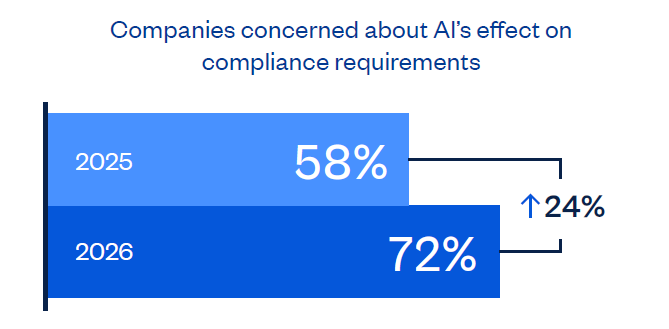
If you’re beginning to worry about the ways your organization is mitigating AI risk, your concern isn’t unfounded. According to the 2026 Compliance Benchmark Report, 72% of organizations are concerned about AI’s effect on compliance requirements, highlighting just how complex the regulatory landscape has become.
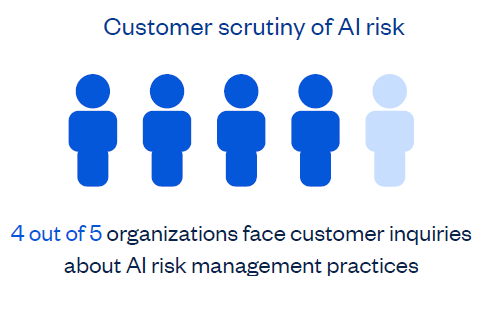
Customers are emerging as a driving factor for concern over AI risk, too. Four out of five organizations now face direct inquiries from customers about their AI risk management practices, according to the 2026 Compliance Benchmark Report. This shows that your stakeholders want to know that the tools you use are safe, ethical, and secure.
Read on to explore how to identify your organization’s level of risk and strategies for mitigating it, whether you’re just beginning your AI governance journey or have a comprehensive plan.
Identifying AI risk in your organization
The first step to developing an AI governance strategy is identifying your level of risk. This involves understanding how AI intertwines with your organization and where the risk is coming from. This could include things like misuse, inadequate oversight, and third-party vulnerabilities.
These missteps could pose negative consequences if your organization is impacted. Even without AI tooling, AI-powered cyberattacks are making breaches more likely, and could go beyond a financial impact to hinder your reputation. Once customer trust is broken, it’s almost impossible to mend. Being realistic about the risks that exist beyond your environment will empower your organization to work smarter.
Benefits of mitigating AI risk
Mitigating AI risk won’t just have a positive impact on your internal security culture, it can instill a sense of trust for your customers and other stakeholders, too. Identifying your organization’s level of risk and developing a strategy for mitigating it can enable your company to:
- Document and communicate controls so customers, boards, and auditors have clear visibility into how AI risks are managed.
- Manage risk systematically through repeatable, auditable processes such as risk assessments, bias audits, and performance monitoring.
- Prepare for multiple regulatory paths by harmonizing governance across jurisdictions and regulatory regimes.
- Train and empower personnel so executives, compliance teams, and employees understand their role in responsible AI adoption.
Options for risk mitigation
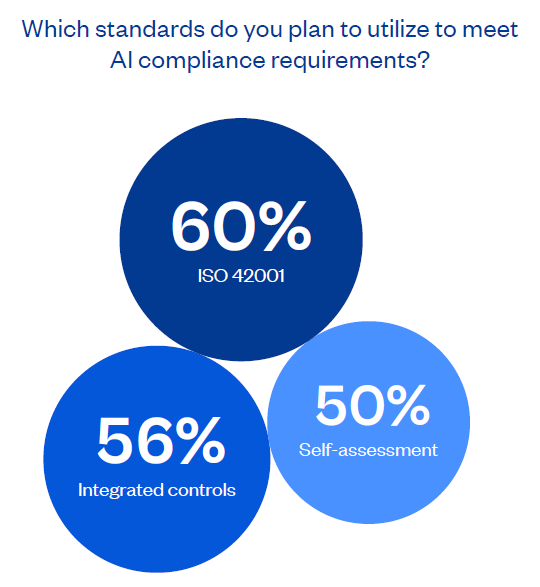
There is no “one-size-fits-all” for AI governance. Companies are scrambling to find the “right” way to manage this new frontier. Several methods are emerging as standard approaches to AI risk strategy:
- ISO 42001: 60% of organizations are looking toward this specific AI management system standard.
- Integrated controls: 56% are weaving AI checks into their existing governance frameworks.
- Self-assessment: 50% are relying on internal audits and checks to gauge their exposure.
Assess your options and needs based on your industry, company size, location, and customer base. If you work in a highly regulated industry like healthcare or finance, you will need to maintain a rigorous level of compliance with AI standards to operate and remain in good standing with standards like HIPAA or GDPR. Meanwhile, organizations that are using AI to brainstorm in a creative industry might have fewer regulations to comply with. It’s all about understanding your environment.
Location can also impact the level of complexity your AI governance strategy should maintain as emerging regulations mean more companies must pursue formal compliance. The 2026 Compliance Benchmark Report found that in the next 12 months, 47% of organizations expect to be impacted by the EU AI Act. If you live somewhere that could be impacted by formal regulations, get ahead of the curve.
Enlist the right partners
After you’ve decided on the approach for your organization – whether it’s an internal policy or a formal regulation like ISO 42001, enlist the right partners. AI is evolving rapidly, and bringing in the right team can mean the difference between a smooth-sailing ship and financial implications of being out of compliance with a mandatory framework.
The level of complexity of your AI governance strategy will dictate what’s right for your organization. If you’re developing an internal policy, a consultancy may do the trick. If you’re pursuing a formal certification, a trusted auditor is essential.
Why A-LIGN
A-LIGN is a strategic, trusted audit partner that can help your organization build, level up, and scale your AI governance strategy. The A-LIGN difference is:
- 6.4k+ global clients
- 36k+ audits completed
- 400+ auditors globally
If you’re ready to take the next step in your AI governance strategy, reach out to A-LIGN today.
Third-Party Risk Management Under ISO 42001 and the EU AI Act
A consistent blind spot in AI governance programs is the tendency of executives to focus on models, documentation, and regulatory classification instead of starting with vendors. Most AI systems today are often composites, relying on foundation models, external datasets, annotation providers, cloud infrastructure, monitoring platforms, and API integrations. In many cases, the most consequential component of the system does not originate inside the organization.
Under both ISO 42001 and the EU AI Act’s high-risk Quality Management System (QMS) requirements, it is clear: if a third party can influence system behavior, you remain accountable for the outcome.
The core principle: Accountability does not transfer
Management systems and product safety regulation share a common logic — responsibility follows the system, not the contract. Under ISO 42001, the organization must control externally provided processes, products, and services that affect the AI Management System (AIMS). That requirement flows from basic management system architecture. If something affects the system, it must be governed within the system.
The EU AI Act applies similar reasoning at a regulatory level. High-risk providers must operate a QMS under Article 17, and that QMS must address resource and supplier management. prEN18286 translates that legal obligation into auditable lifecycle controls.
The effect is straightforward. If your supplier changes a dataset, updates a model, modifies evaluation parameters, or alters hosting conditions, and that change affects safety, robustness, or compliance, you are responsible for demonstrating control.
The regulator does not audit your vendor — the regulator audits you.
What ISO 42001 actually requires
ISO 42001 is often described as a governance standard, which is accurate but incomplete. It is a management system standard built on the same high-level structure as ISO 27001 and ISO 9001. That means it expects defined processes, assigned responsibilities, operational controls, monitoring, corrective action, and evidence.
Third-party governance fits squarely within Clause 8’s operational controls and Annex A’s supplier controls. The intent is not to force micromanagement of vendors; it is to ensure that any externally provided input that affects AI lifecycle outcomes is identified, risk assessed and controlled.
In practice, that means an organization must be able to answer several hard questions:
- Do we know which suppliers influence model behavior or training data integrity?
- Have we defined requirements those suppliers must meet?
- Can we detect if they change something material?
- Do we have contractual mechanisms to enforce notification and traceability?
- Can we show evidence that we monitor their performance?
If those answers are unclear, the AIMS is incomplete.
Annex A reinforces this by requiring allocation of responsibilities across the AI lifecycle. That allocation does not stop at organizational boundaries — it must include partners and suppliers.
ISO 42001 treats supplier inputs as lifecycle components; a framing that carries significant weight.
What changes under the EU AI Act and prEN 18286
The EU AI Act raises the stakes for high-risk systems. Article 17 requires a QMS that covers design control, testing, validation, monitoring, corrective action, and supplier oversight. prEN 18286 interprets those requirements into auditable QMS elements aligned with product conformity assessment.
The regulatory logic is different from ISO certification logic. ISO certification demonstrates conformance to a management system standard, and the EU AI Act demonstrates conformity to essential requirements under a product safety framework.
For high-risk providers, supplier governance becomes part of conformity.
- If you rely on third-party training data, you must ensure its relevance and quality
- If you rely on a foundation model provider, you must understand version control and update processes
- If you rely on external evaluation services, you must validate methodological rigor
The QMS must demonstrate that these external elements are integrated into your conformity controls. During conformity assessment, auditors or notified bodies will expect evidence that supplier-related risks are identified, evaluated, controlled, and monitored. Change control and version traceability becomes critical, and corrective action must extend beyond internal teams.
The provider remains the legally accountable actor.
Where the two frameworks converge
Although ISO 42001 and prEN 18286 arise from different legal and voluntary regimes, they converge on the same management truth:
- Third parties can alter system behavior
- Altered system behavior can alter risk exposure
- Risk exposure must be governed
Both frameworks therefore require:
- Identification of AI-relevant suppliers
- Risk-based classification of those suppliers
- Defined expectations and controls
- Documented oversight
- Evidence of monitoring and improvement
The difference lies in consequence. Under ISO 42001, failure may result in certification findings. Under the EU AI Act, failure may result in regulatory enforcement.
Regardless, the control logic is the same.
Why traditional vendor risk programs fall short
Many organizations assume their existing third-party risk management program covers this territory, but most do not. Traditional TPRM programs focus on information security, privacy compliance, and financial stability. They are structured around data protection and service availability.
AI supplier governance introduces new dimensions:
- Model update transparency
- Dataset provenance integrity
- Evaluation reproducibility
- Bias and performance monitoring
- Algorithmic change notification
If these are not embedded into supplier contracts and oversight procedures, there is a governance gap.
The market is only beginning to recognize this distinction. Regulators will not be forgiving if that recognition comes too late.
What leaders should do now
If your organization is pursuing ISO 42001 certification or assessing exposure under the EU AI Act, supplier governance should be treated as a design control exercise, not a procurement checklist.
Start by mapping your AI lifecycle end to end. Identify every external input that could influence system performance or regulatory conformity.
Then ask:
- Are these suppliers tiered by AI-specific risk?
- Do our contracts include AI-relevant obligations?
- Do we receive structured change notifications?
- Can we demonstrate monitoring and corrective action that includes suppliers?
If the answers require improvisation, that is a sign. Governance gaps rarely announce themselves loudly — they surface during audit, incident response, or enforcement.
The strategic view
AI governance is often framed as policy writing or ethical commitment. In reality, it is systems engineering, and systems extend beyond organizational walls.
If your AI system depends on vendor-supplied AI components, then your governance perimeter must extend to those relationships. That is true under ISO 42001 and it is non-negotiable under the EU AI Act.
The organizations that mature fastest in this space are not those with the most detailed policies. They are those that design supplier governance into their lifecycle architecture from the beginning.
How A-LIGN can support your AI supplier governance strategy
At A-LIGN, we help organizations operationalize AI governance in a way that aligns management system rigor with regulatory expectation.
We assist with:
- ISO 42001 readiness assessment
- ISO 42001 third party audit and certification
Supplier governance is no longer a back-office function in AI programs. It is a control domain that influences certification outcomes and regulatory exposure.
If you rely on third parties to build, train, host, or monitor your AI systems, your governance model must reflect that reality. Now is the time to test whether it does.
Connect with our team to evaluate your AI supplier governance posture before your auditors, customers, or regulators ask the same questions.
Why CMMC Feels Chaotic — and Why Assessment Quality Is the Fix
How disciplined assessment procedures, not opinions, create clarity, confidence, and trust across the defense supply chain
Most business leaders preparing for the Department of Defense’s Cybersecurity Maturity Model Certification (CMMC) Level 2 aren’t confused about the mission. They understand why CMMC exists, why Controlled Unclassified Information (CUI) protection matters, and the stakes for contracts, customers, and national security.
What they struggle with is the experience. CMMC can often feel chaotic, subjective, and exhausting. Even after a months‑long readiness journey and an assessment that ends in a “pass,” many leaders quietly say the same thing:
“We passed, but I’m not confident we could do this again without starting over.”
That feeling isn’t caused by CMMC. It’s caused by assessment quality.
Leaders are clear: quality is the problem
Across regulated industries, A-LIGN’s Compliance Benchmark Report highlights a consistent message: Quality matters more than ever. Poor quality assessments waste time and energy, cause rework and confusion, undermine executive confidence, and make ongoing compliance harder, not easier.
Many leaders say they would switch providers based on quality alone. Not on personality, friendliness, or formatting.
Quality is what matters.
When assessment quality is low, the entire process starts to feel subjective, even when the standard itself is not.
Why poor-quality CMMC assessments create chaos
Low-quality assessments almost always share the same root cause: They are not anchored to a disciplined assessment procedure.
Without that anchor, everything drifts.
- Evidence requests appear without a clear purpose
- Interviews become substitutes for validation
- Artifacts are collected “just in case”
- Scope expands quietly
- Rabbit holes never close
From the outside, it feels unpredictable. From the inside, it’s simpler: The assessor has lost the frame that governs how assessments are supposed to work.
The assessment frame most organizations never see
CMMC assessments are not improvised. They are grounded in decades of federal assurance practice, formalized in NIST SP 800‑53A and NIST SP 800‑171A. Every legitimate assessment is built from the same components:
1. The determination statement
The determination statement defines what must be true. It is:
- Defined by NIST
- Fixed
- Not invented by the assessor
Examples:
- Access is limited to authorized users
- Audit records contain required information
- An incident response capability exists and is followed
The assessor does not decide what “good” looks like. They simply verify whether the condition is satisfied.
2. The assessment method
Methods define how evidence is gathered. There are only three methods:
- Examine
- Interview
- Test
Methods do not determine outcomes. They are simply tools used to collect information necessary to evaluate the determination statement.
3. The assessment object
Objects define what the method is applied to. They include:
- Policies, procedures, and plans
- System configurations and logs
- Operational activities
- Individuals responsible for control execution
High-quality assessments tightly control these inputs through structured information requests not ad hoc evidence chasing.
4. The determination
After reviewing evidence gathered through the defined methods and objects, the assessor answers one question: Is the determination statement satisfied or not satisfied?
There is no:
- “Mostly”
- “Close enough”
- “Intent”
- “We’ve started working on it”
Only evidence‑based conclusions.
What happens when this frame is ignored
When assessors lose discipline, quality collapses. Evidence loses purpose, scope creeps, interviews run endlessly, and findings feel arbitrary. This causes organizations to experience endless evidence requests, confusion about what matters, and assessments that feel personal, not procedural.
This is not because CMMC is vague, but because the assessment procedure is being executed poorly.
What high-quality assessments feel like instead
When the assessment frame is applied correctly, everything changes. The assessment feels calmer: every request has a reason, every interview has a purpose, and every artifact maps back to a determination.
When the condition is satisfied, the work stops.
That predictability is what CMMC quality feels like and why user experience matters. It’s also what helps organizations sustain compliance, not just pass once.
What the assessor is — and is not — evaluating
High-quality assessors do not evaluate effort, maturity, intent, how hard the team tried, or future plans.
They evaluate what exists and operates today against predefined determination statements. This objectivity is what allows trust to scale across the defense supply chain.
Explainability: The missing discipline in most assessments
High‑quality assessments do one more thing exceptionally well: They explain the why. Not opinions or preferences, but clearly:
- How the requirement was interpreted
- Which methods were used
- Which objects were examined
- What evidence was relied on
- Why that evidence satisfied, or did not satisfy, the determination
Without this discipline, findings feel arbitrary even when technically correct.
Explainability:
- Reduces disputes
- Increases executive confidence
- Enables teams to sustain compliance
- Turns findings into learning instead of frustration
Internal readiness efforts should follow this same model so that certification feels like confirmation, not a cliff.
The question every CMMC client should know to ask
If an assessment ever starts to drift, pause and ask:
“What determination statement are we evaluating, which method(s) are you using, what object(s) do you need to see, and how does that evidence satisfy the determination?”
A disciplined assessor will answer clearly. If they can’t, the problem isn’t your compliance posture — it’s assessment quality.
What the A-LIGN standard looks like in practice
High-quality assessments don’t happen by accident. They happen when an assessment organization takes its role seriously. At A‑LIGN, we are laser-focused on delivering high-quality CMMC assessments because we respect the mission, the responsibility leaders carry, and the work organizations have already done.
Our role is not to surprise, trap, or exhaust teams. Our role is to apply disciplined, explainable assessment procedures with consistency and independence so results can be trusted and sustained at scale.
This allows us to:
- Conduct assessments calmly and predictably
- Reduce unnecessary operational disruption
- Produce determinations that are defensible and clear
- Support continuous compliance, not one-time certification
This is not about being easy — it’s about being precise. That precision is the A‑LIGN standard.
The bottom line
If CMMC feels chaotic, that’s a signal that quality is missing. High-quality assessments are not dramatic. They’re structured, calm, and explainable.
When they’re done right, leaders don’t say: “I hope this holds.”
They say: “Yes, we meet the standard, and we know exactly why.”
Breaking Down Barriers: How to Get Started with Audit Harmonization
Compliance teams in every industry and company size are facing a great challenge: managing their growing portfolio of audits. The 2026 Compliance Benchmark Report found that 1 in 4 organizations say the greatest challenge to their compliance strategy is conducting multiple audits.
The challenge of audit complexity applies to virtually every compliance program, with 97% of companies conducting at least two audits per year. The report also found that enterprise organizations are even more affected by audit complexity, with 74% conducting four or more audits per year. Managing multiple auditors only adds to the complexity organizations are facing today, and 90% of organizations surveyed are approaching their strategy with multiple auditors.
There’s a better way to manage this complexity: audit harmonization. This solution empowers compliance teams to work more efficiently with reduced duplicative work, streamlined communication, and a more methodical compliance strategy. So why aren’t more organizations doing it? Let’s explore.
Defining audit harmonization
Audit harmonization’s ultimate goal is simple: streamline audit cycles. But how does it work?
This approach to compliance, which is designed for enterprise organizations that conduct more than three audits per year, involves working closely with an experienced audit partner. We will work directly with compliance teams to understand business and compliance goals so we can identify overlaps when the scopes are the same, and streamline complex compliance strategies.
Consolidating audits with one provider can help drive audit harmonization results. Moving all your audits to one provider saves time by streamlining meeting times, reducing duplicative work and evidence, and ensuring consistency across your compliance program.
Who is audit harmonization for?
A-LIGN designed the audit harmonization program with enterprise companies in mind. This service is best suited for large companies with three or more frameworks to adhere to.
Who will execute my audit harmonization process?
Your audit harmonization process will be led by a dedicated team who will offer tailored guidance to help you feel prepared and confident. This team will create a strong partnership focused on ongoing success and features A-LIGN’s expert team of auditors, including our leadership, to ensure you continuously receive the highest quality, white-glove service.
How does audit harmonization work?
First is the preparation phase, where our team aims to understand the way your business operates, your organization’s objectives and the role of compliance in those objectives. A-LIGN identifies areas that may impact the audit scope, such as changes to the business, locations, headcount, processes, IT, software, and infrastructure. We’ll also work with you to seamlessly transition existing audits over to A-LIGN.
Next, we will enter the planning phase, where we’ll create and deliver a detailed master audit plan that outlines audit timelines. This is where you’ll begin uploading evidence in your preferred platform, and our audit management technology creates a more efficient experience by applying overlapping evidence to multiple frameworks where appropriate and scopes are the same.
Our team also works throughout the process to consolidate auditor meetings where applicable. Consolidating auditor meetings across SOC 2, ISO 27001 and PCI, for example, can save 40 hours in meeting time alone.
We’ll then kick off fieldwork, and host recurring regular touchpoints to ensure progression and achievement of deadlines.
Finally, our team will deliver a high-quality report for each of the applicable service lines. From there, we’ll schedule a post-audit touchpoint to regroup and discuss.
Benefits of audit harmonization
For companies with growing audit complexity, audit harmonization offers a tailored, integrated compliance framework that aligns business and compliance goals, mitigates risk, and refines audit efficiencies to save you time and deliver a seamless, white-glove audit experience. Benefits of audit harmonization include:
Align business and compliance objectives
We create a compliance strategy with a custom solution to your compliance hurdles that drives efficiency and business outcomes. We have interim strategic workshops for continual improvement and evolution of your compliance program.
Simplified transition and consolidation
Our customized transition process ensures a frictionless migration. We identify and eliminate overlapping requirements, requests, and subject‑matter interviews.
Seamless, white‑glove audit experience
A dedicated team with a central point of contact provides tailored guidance and consistent resourcing to build a deep understanding of your business.
Barriers to audit harmonization
Compliance professionals understand the benefits of audit harmonization: 99% of those surveyed in the 2026 Compliance Benchmark Report say they know audit harmonization would help them save time or money. So why aren’t they doing it?
Between a full schedule of meetings, evidence collection, conducting audits, and administrative work, it’s tough to find the time to understand the process and how to get started. Our report found that 20% of organizations say that their biggest challenge during the audit process is limited staff resources. Without a developed team and an experienced partner in your corner, the process can be intimidating. The biggest barrier to audit harmonization for 27% of organizations is that they don’t know how to get started and need more information.
How to get started with audit harmonization
Selecting the right partner is key to a successful audit harmonization engagement. This choice will set the stage for your compliance strategy, so be sure to take the time needed to vet potential partners and choose one that will educate and empower your team.
Qualities to look for in a partner
Not just any auditor can set your organization up for success with audit harmonization. It requires a dedicated, experienced partner. Here’s what you should look for in a potential partner:
- Breadth and depth of services: From their certifications and accreditations to their experience with similar companies, the breadth and depth of services is crucial to successfully harmonizing your audits. This also demonstrates that the auditor can grow with your compliance program. Choosing a partner that can already execute audits on your roadmap means you can achieve your goals sooner and with less effort.
- Tech-enabled: Technology isn’t the future anymore, it’s the standard. The right audit partner will be tech-enabled, whether through their own in-house audit management software or by integrating with GRC and audit readiness tools.
- Aligned audit process: An experienced auditor will have a clear process laid out for your audit process and harmonization engagement. This demonstrates their level of experience and ability to provide your organization with a high-caliber audit.
Remember: choosing the right audit partner will set the tone for your compliance strategy as a whole, so choose wisely.
Why A-LIGN
A-LIGN is the leading provider of high-quality, efficient cybersecurity compliance programs.
Our more than 400 global auditors have completed more than 36,00 audits and have more than 20 years of experience providing the best quality audit experience and final reports, exemplified through A-LIGN’s 96% customer satisfaction rating.
A-LIGN’s white glove audit harmonization process ensures that your organization can get back to work instead of completing duplicative work. Our industry-leading audit management software, A-SCEND, powers our best-in-class audit experience.
With A-LIGN, you can achieve your compliance goals with confidence and earn a report that your buyers can trust, with support from technology that streamlines the process. Ready to learn more? Contact us today.